
Phoenix’s real estate market isn’t what it used to be. Long gone are the days when new agents flooded the industry to sell multiple homes a month to buyers with sub-4% mortgage rates.
Things are different now — and yet, people still need Realtors. People still need to relocate, or size up their square footage, or adjust to their family’s changing needs. And the agents who will stand the test of time are the ones who are still finding ways to work for their clients, despite current market conditions.
But what does that look like on the business end? Is there a specific brokerage model or agent blueprint that works best in today’s slower market?
Phoenix Agent spoke with eight prominent Phoenix-area brokerage leaders to discuss the business strategies that cultivate the most success for agents — and their clients. Here’s what they had to say.
Oleg Bortman, Co-Founder, The Brokery
 Oleg Bortman said that boutique brokerages — particularly those with split, percentage-based commission models — are best positioned to succeed in today’s market.
“When you have a flat fee or a very, very low monthly fee or transaction fee, the broker themselves cannot provide any value other than straight-up being the cheapest on the market,” Bortman said. “The boutique firms or independents that take a split typically have more back-end support … So in a market where homes are taking a much longer time to sell, and you need more than just a pulse to sell a house, you have to have a brand that’s very strong to differentiate yourself in a market that’s flooded with Realtors.”
Bortman added that AI is not the answer to marketing woes.
“Artificial intelligence is not going to be the answer to everything in order to save money,” he explained. “Most agents don’t like to spend any money, so they need to have the local brand that’s strong and professionals doing their marketing. Most agents are either good at sales or good at marketing, but they can’t typically do both.”
While local brokerages are best positioned to succeed in today’s market, conversely, Bortman said downstream brokerage models are antiquated systems.
Those models often require agents to act as Realtors and recruiters at the same time — and it’s more beneficial for agents to change their mindset and pick a lane, Bortman said.
“You can’t be a good recruiter, a good Realtor, a good business owner, all at once. And when you think you’re being a good recruiter, you’re still depending on someone else’s production,” Bortman said. “So when a market gets tighter, like we’re seeing now, even if you have 50 or 100 people downstream that used to sell one house a month, now they’re selling one every four months. You’re not going to get any residual income. It’s forcing them to go back to selling houses and not just recruiting.”
Bortman also cautioned agents away from low-cap commission splits, which he said provide very little incentive for business owners to put money back into their business, let alone their agents’ businesses. Instead, he said, find a firm that invests in agents’ potential success.
“Find a firm that believes in training and coaching,” Bortman said. “You want to go to a firm where the more you sell, the smaller the split comes, but you still pay something into the split because then the owner has an incentive for you to sell more real estate because then you’re [both] making more money.”
Todd Sumney, Chief Industry Officer, HomeSmart
 Teams are growing — but not in the way people might think, said Todd Sumney.
Specifically, Sumney pointed to local, independent brokerages that affiliate with large, technology-driven companies like HomeSmart and begin operating as large teams.
By affiliating with a large, national brokerage, Sumney said, those smaller brokerages are getting rid of their liability and gaining access to resources like a broker team, paperwork team, closing team, payment team, technology and transaction-management software to help them manage their transactions.
“Instead of doing all that plus running a business, now they can just focus on training their agents, coaching their agents, helping them with marketing, recruiting and retaining,” he explained.
Sumney specifically pointed to NEXT, a large-scale HomeSmart team led by Phil Sexton that operates as a sort of “brokerage within a brokerage.”
“[Sexton] wants to be the back-end support for individual agents and teams under his team,” Sumney said. “NEXT is doing all the marketing, transaction management, video work, marketing creation, media buys, materials and transaction management, and he’s using AI to build efficiency and really support these agents.”
That’s a valuable model for agents who want to be out in the field, working with their clients, rather than worrying about social media posts or writing scripts.
“The teams that are successful now are taking that burden, both administrative and marketing, off the agent,” Sumney said.
However, Sumney said that regardless of which brokerage agents find themselves aligned with, it’s important to remember that a slower market doesn’t automatically mean a less successful business.
“Great agents don’t let the number of transactions in the market actually dictate their production,” Sumney said. “Real estate is about serving our customers, helping them and engaging them, and not expecting anything in return. I think the agents that focus on that … even in the midst of a slower market, are doing well.”
D. Patrick Lewis, Designated Broker, Fathom Realty Elite
 In an industry saturated with professionals, it’s important for agents to have a strong value proposition, said D. Patrick Lewis. They have to be able to illustrate the “pain points” they can take away from clients — and likewise, it’s important for brokerages to demonstrate the same value to agents.
While previous business models emphasized the agents working for the brokerage, or the brokerage working for its agents, partnership between the two parties is now the differentiating factor. But there’s no one business model that’s best suited for today’s market, said Lewis — all have value in their own right.
“There is no easy button,” Lewis said. “There is no brokerage that has figured out how to ‘make it.’”
For agents who find themselves in situations where their current brokerage doesn’t feel like the right fit, Lewis said they need to ask why.
“Why is it wrong? Why are you not in partnership?” Lewis asked. “Is it something that the agent is not doing? Is it something more you need from your brokerage? What agents really need to do is interrogate reality.”
Similarly, agents should ensure they’re doing everything they can to be successful before they look for a different brokerage.
“You have to fix your business before you can decide to change your brokerage,” Lewis said. “If you’re failing to see the value you provide to your consumers, that’s going to follow you to the next brokerage. There’s no brokerage that is going to be able to help you overcome that.”
Likewise, when it comes to luxury clientele, no specific brokerage model will set an agent apart from the rest. Instead, authenticity, differentiation and professionalism are what makes the difference.
“What are you doing for them? How are you going to make the process easier and more understandable?” Lewis asked. “When dealing with sophisticated buyers and sellers, you have to bring a professional mindset and an in-depth understanding of potential obstacles and how to overcome them.”
However, Lewis and his agents pride themselves on providing that luxury service across all price points — and in a business like real estate, that’s a huge key to building lasting relationships and, in turn, lasting success.
“Consumers don’t hire the business model. They hire the agent,” Lewis said. “The right model makes you more efficient, but it will not create business for you.”
Amanda Thomason, Branch Manager, Coldwell Banker Realty
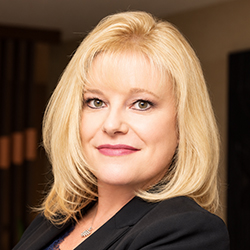 While there are successful agents working within a variety of models nowadays, Amanda Thomason is seeing significant growth among cloud-based, technology-driven businesses with flexible commission models. However, she said the businesses that flourish moving forward will be the ones that combine the entrepreneurial freedom agents want with the technology, leadership, marketing resources and relationships they need to succeed and grow their skillsets.
“Today’s market requires much more than putting a home in the MLS and waiting for a buyer,” she explained. “It requires strategic pricing, understanding buyer behavior, identifying where demand is coming from, targeted marketing and knowing when to adjust your approach. Buyers and sellers are asking more questions, evaluating their options more carefully and expecting greater expertise from the professionals representing them.”
As a managing broker, Thomason wants her agents to have access to resources and technology that give them the confidence to sit across from a buyer or seller and make recommendations grounded in real market intelligence. But simply providing access to tech isn’t enough.
“The future of our industry isn’t about choosing between technology and relationships. It’s about using technology to make those relationships, and the advice we provide, even stronger,” Thomason said. “Agents need to know how to use it effectively and, more importantly, how to translate the information it provides into meaningful guidance for their clients.”
She also rejects the idea that a brokerage’s responsibility begins and ends with providing a license affiliation, a commission structure and access to tools — especially considering the financial responsibility agents bear to their clients.
“A brokerage should be more than a place where agents conduct transactions. It should be a place where they build sustainable businesses and become better advocates for the people they represent,” she said. “I believe the models that remain relevant will be those that can consistently demonstrate that value.”
For agents who aren’t finding success, Thomason encourages them to take an honest look at their businesses. Are they struggling to generate new opportunities? Do they need better marketing, more accountability, stronger technology or greater access to leadership? Or do they already have those resources, but aren’t using them consistently?
“A brokerage can provide exceptional resources, and an agent still has to be willing to learn, adapt and put in the work,” Thomason said. “I would never encourage an agent to choose a brokerage solely based on the highest commission split they’re offered. I would encourage them to look at the complete picture: the resources, the leadership, the culture, the opportunities, and how all of those things contribute to the experience they can provide their clients.”
Nicholas Yale, Designated Broker, Brokers Hub Realty
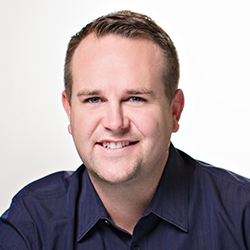 In today’s slower market, expectations are changing regarding what agents are looking for in a brokerage — and what consumers are looking for in an agent.
“If you had asked me 20 years ago, brokerage size mattered. That began shifting toward more boutique firms, where agents could be more nimble and have greater freedom of expression,” said Nicholas Yale. “Over the last five years, that has shifted once again, with large corporations buying up both small and large companies, creating increasingly consolidated organizations.”
So while agents have historically sought more economical commission splits or lower monthly fees, many are now comfortable paying higher splits, adopting a “you get what you pay for” mindset.
“Serious, successful agents are increasingly willing to pay more to avoid being associated with what they perceive as a ‘clearinghouse’ of agents,” Yale said. “A cavernous, empty office can be demoralizing for those who still want to work in a physical space. This is where I believe boutique brokerages have an advantage. They can offer smaller, location-forward spaces that serve as a hub where agents can pop in, collaborate and feel connected without getting lost in the crowd.”
Looking to the future, Yale said the makeup of the agents within varying models will become increasingly different. He encourages agents to “blueprint their career paths” so they know where they’re headed and can choose a brokerage accordingly.
“If you’re an agent who comes and goes with the whims of the market, being at a brokerage known for high producers probably isn’t going to be your jam. Likewise, if your focus is on building a career rather than pursuing a hobby, you’ll want a brokerage that reflects that commitment,” he explained. “Do you want to be a professional or a hobbyist? Choose a business model that reflects that answer.”
Yale added that while some agents just want to do their own thing and don’t see the value in training, education or collaboration, others crave that knowledge and interaction. Others are great agents but have trouble finding their next client, so a team is the best fit. The right business model for each depends on their unique circumstances — not the market.
And ultimately, the grass may not automatically be greener at another brokerage.
“If you don’t water the grass where you are, you’re probably not going to water it over there, either,” Yale said. “Figuring out who you are, where you want to end up, and then examining everything in between is where I think agents often fall short.”
And in Yale’s opinion, the major missing key for many agents may be one simple thing: professionalism.
“There’s a reason real estate agents are sometimes viewed just slightly above used-car dealers in the public’s eyes. And frankly, we’ve done it to ourselves. I fear we’re only accelerating that perception with dancing TikToks, game-show contests and lawsuits over efforts to keep listings hidden from the rest of the industry. I don’t see any of that boding well for us,” Yale admitted. “I yearn for the day when consumers look to us for what we actually provide: competent contractual knowledge, sound guidance and a professional skillset that reflects the fees we charge. Absent that, we’ll continue to see a race to the bottom with commission compression. When trust is missing, people naturally want to pay less.”
Sherri Monteith, Managing Broker, Russ Lyon Sotheby’s International Realty
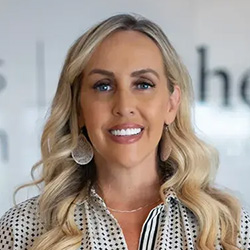 Relationships are the cornerstone of any market, said Sherri Monteith, but they’re especially paramount in slower markets.
“When real estate advisors build a relationship with their clients, it’s one of trust, mutual respect and loyalty,” she said. “People need homes in slow markets, people need homes in fast-paced markets. Real estate is always being bought and sold, but who will be trusted to help a client buy and sell that real estate? The person with whom they’ve built a long-standing relationship.”
That’s why businesses that recruit based on quantity rather than quality aren’t posed to succeed in a market like today’s, Monteith explained.
“When the method is ‘hire anyone and see what sticks,’ there is a very high probability that not much will stick,” she said. “Being patient, saying ‘no’ when necessary and truly allowing what is meant for you to find you, the success rate is much higher.”
Monteith urges agents to do their due diligence when it comes to choosing the right path for their business.
“Identify what isn’t working. Meet and attract the right people. Explore the other possibilities and do what is best for your business,” she said. “Ask people what is working for them and why. Mirror as much of that as you can into your own roles within your own business.”
That said, Monteith added, different business models work well for different people. The decision on which type to align with is deeply personal to each individual agent.
“A real estate professional should make their own business goals and standards immediately and then find the brokerage that best suits their needs for the type of support they will need to successfully run their business,” she said.
Kristina Watson, General Manager, Berkshire Hathaway HomeServices Arizona Properties
 Technology-driven brokerages that operate efficiently while providing agents with the flexibility and resources they need to run their businesses are best poised for growth in today’s market, said Kristina Watson.
But the future of real estate doesn’t come down to “traditional” versus “cloud-based,” she added. It comes down to which brokerages are willing to evolve and adapt to the changing needs of agents and consumers.
“Technology has completely changed how we do business, and brokerages need to embrace that,” Watson said. “But technology alone isn’t enough. Agents still need leadership, education, support and someone they can turn to when they have a difficult transaction.”
Watson urged agents to examine how brokerages define growth. Having experienced several challenging real estate markets throughout her career, she’s seen her fair share of brokerages close their doors, merge with other companies or scale-back their services, simply because their business models weren’t sustainable.
“In a market like we’re experiencing today, I think one of the smartest decisions an agent can make is aligning themselves with a financially stable brokerage,” said Watson. “You want to know the company you’re building your business with is going to be around through the good markets and the bad.”
In other words, the brokerages that will come out of this market stronger are the ones that can combine innovation, financial stability, strong leadership and a genuine commitment to helping their agents succeed.
Those qualities are especially valuable in the luxury real estate world, Watson said.
“Luxury clients expect exceptional service, strong negotiation skills, sophisticated marketing, discretion and an agent who truly understands their market,” she said. “There is a tremendous advantage to being affiliated with an established brand that has national and international connections, strong brand recognition and the marketing resources to give luxury properties the exposure they deserve.”
Watson also encouraged agents to make sure they’re taking advantage of all their current brokerage has to offer — because it’s a misconception that there’s one perfect brokerage model for everyone.
“No brokerage, regardless of its model, is going to build your business for you. You have to put in the work,” she said. “Look at the bigger picture. Choose a brokerage that aligns with your goals, has leadership you trust, provides the resources you need and has the financial stability to be there through the good markets and the bad. Because the true value of a brokerage isn’t necessarily what it offers you when business is booming. It’s what it can provide when business gets tough.”
Katrina Barrett, Broker-Owner, Local Luxury Christie’s International Real Estate
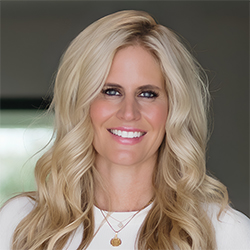 When it comes to business models, Katrina Barrett is betting on highly specialized teams with shared support systems.
“When there are fewer transactions, every listing has to work harder,” Barrett said. “A team that shares the cost of marketing, operations and transaction support can give clients a higher level of service while freeing agents to spend more time advising clients, following up with buyers and negotiating.”
That’s why it’s important for teams to know exactly which clients they serve — and have the systems to serve them well. Barrett cautioned agents away from brokerages that focus heavily on recruiting but may not offer much of a support system after agents join.
“In a fast market, momentum can cover for gaps in training, marketing and transaction support,” she explained. “In a slower market, those gaps show up quickly. When a listing sits or a deal gets complicated, agents find out how much support they’re actually getting for the split they’re paying.”
For established agents, Barrett advised them to take a look at their recent deals and address how much support their brokerage actually provided.
“Where did you need help? Who helped you win the listing, figure out the pricing or keep a difficult deal together?” Barrett asked. “Then look at what you paid your brokerage and what you spent separately on marketing and support. That will tell you more than comparing commission splits. If you’re interviewing a new brokerage, ask them to walk you through what happens when a listing has been on the market for 60 days and the seller is getting anxious. You’ll learn a lot from how specific their answer is.”
For agents who are new to the business, Barrett suggested working alongside an agent with the experience to impart actual wisdom and industry know-how.
“Go to showings, sit in on pricing conversations and listen to how they handle a tough negotiation or talk with a seller whose home has been sitting,” Barrett said. “When it’s your turn to have those conversations with your own clients, you’ll have seen how an experienced agent handles them.”
For her own part, Barrett built her business on providing constant care for her clients by hiring dedicated marketing professionals, attorneys and showing agents — so every part of the sale gets the attention it deserves.
“My time is best spent deciding how to price and position their home, negotiating on their behalf and talking through the decisions that come up along the way,” she said. “My clients know I’m accountable for the sale, and they have a whole team looking after the details. This model has been working well for us, even in this challenging market.”